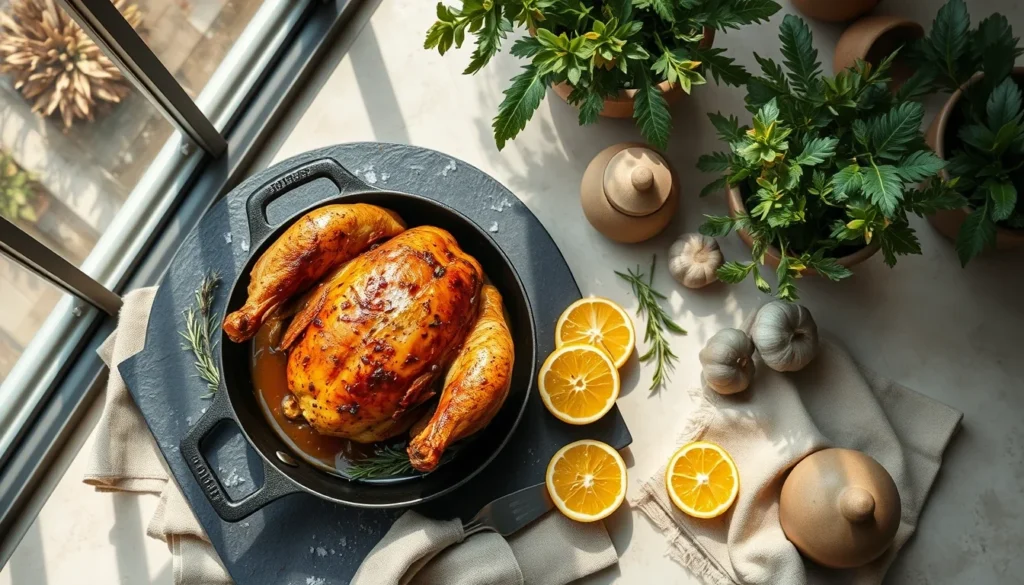
This cast-iron herb and citrus Chicken Recipe yields crisp, amber skin and juicy meat by roasting a dry-brined bird at 425°F over sweet aromatics. As misty 45°F marine air settles over Ballard and Capitol Hill, a blistering skillet transforms simple PNW ingredients into a restorative Sunday supper.
Classic French bistro technique meets Pacific Northwest provenance in this one-pan dish. Diners at Le Pichet on 1st Avenue near Pike Place Market know the quiet luxury of slow-roasted Washington poultry. Recreating that golden crust at home requires heavy iron, dry air, and bright citrus.
Why Does Cast Iron Produce Crispier Roast Chicken Skin?
Cast iron holds intense thermal mass and transfers heat evenly across the entire cooking surface. Preheating a 12-inch skillet to 425°F renders subcutaneous fat immediately upon contact, building a savory pan fond while crisping the underside without steaming the meat.
Heirloom-quality skillets turn a weeknight roast into a lifelong kitchen investment. Shoppers visit Cookin’ at Madison Park on East Madison Street for seasoned Lodge cast iron and enameled Le Creuset vessels. Those heavy pans maintain steady oven temperatures even when cold rain chills the surrounding landscape.
Where Can Seattle Cooks Source Heritage Poultry and Fall Aromatics?
Seattle cooks find superior flavor by sourcing air-chilled, heritage-breed poultry and peak-season produce from local butcheries and year-round markets. Air-chilled birds retain zero excess water, allowing skin to blister cleanly while sweet fall leeks and fresh herbs perfume the roasting pan.
In Ballard, Beast & Cleaver on NW 80th Street supplies pasture-raised poultry from sustainable PNW farms. Just blocks away, the Ballard Sunday Farmers Market on Ballard Avenue NW runs every Sunday from 9:00 AM to 2:00 PM with crisp, soil-grown leeks and woody herbs.
Down near the Central Waterfront, World Spice Merchants on Western Avenue stocks whole Tellicherry peppercorns, flaky sea salt, and aromatic thyme. Home cooks looking to sharpen their trussing and knife skills also book seasonal workshops at The Pantry on NW 70th Street.
How Do Preserved Lemon and Leeks Balance Rich Poultry Fat?
Preserved lemon rind and fermented brine cut through rich chicken fat with concentrated, floral acidity. Meanwhile, thick-sliced leeks braise slowly in the rendered schmaltz, soaking up savory drippings to create a tender, clean eating leek recipe built right beneath the bird.
Fermentation brings deep complexity to cold-weather cooking across the region, much like the techniques explored in our guide to cider-glazed cedar salmon. Pairing preserved citrus with a healthy leek recipe base turns pan drippings into a bright, restaurant-caliber sauce without heavy cream.
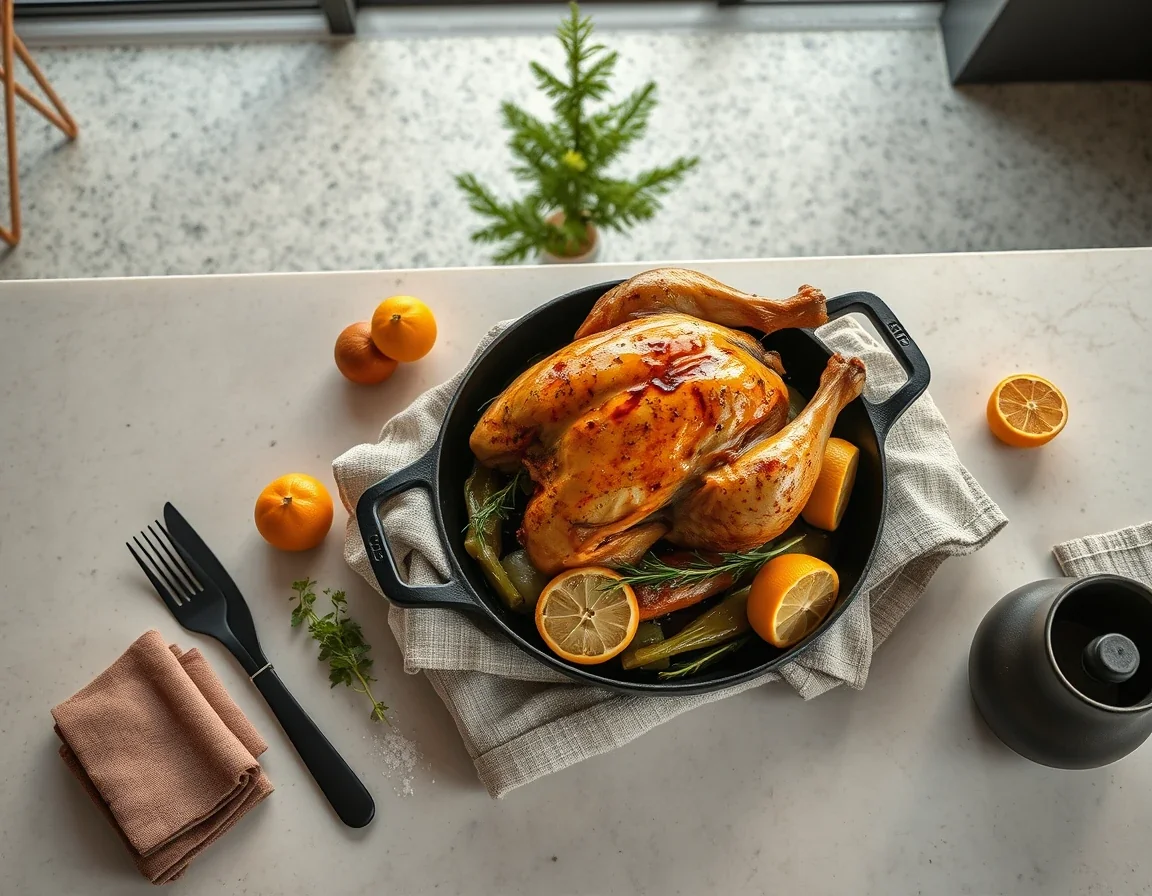
As late November approaches, hosts planning holiday menus also browse the Seattle Christmas Market at Seattle Center on Harrison Street for artisanal serving boards and spice blends. Stocking a well-equipped pantry makes seasonal entertaining effortless.
Cast-Iron Herb and Citrus Heritage Chicken Recipe
Prep Time: 20 minutes (plus 12 hours dry brine) | Cook Time: 55 minutes | Total Time: 1 hour 15 minutes (active and roasting) | Servings: 4
Ingredients
- 1 whole air-chilled heritage chicken (4 to 4.5 pounds), giblets removed
- 1.5 tablespoons kosher salt
- 1 teaspoon freshly cracked black pepper
- 2 large leeks, white and light green parts only, halved lengthwise, thoroughly rinsed, and cut into 2-inch pieces
- 1 whole head of garlic, halved horizontally
- 1 preserved lemon, quartered, plus 1 tablespoon preserved lemon brine
- 6 sprigs fresh thyme
- 2 sprigs fresh rosemary
- 2 tablespoons unsalted butter, softened (or extra-virgin olive oil)
- 1/2 cup dry white wine or low-sodium chicken stock
Instructions
- Pat the chicken completely dry inside and out with paper towels. Season the skin and cavity evenly with kosher salt and cracked black pepper. Place the bird uncovered on a wire rack set inside a rimmed baking sheet and refrigerate for 12 to 24 hours to dry-brine.
- Remove the chicken from the refrigerator 45 minutes before roasting so it approaches room temperature. Place a 12-inch cast-iron skillet on the center oven rack and preheat the oven to 425°F.
- Rub the softened butter or olive oil evenly over the chicken skin. Stuff the cavity with half the preserved lemon quarters, half the garlic head, and four sprigs of thyme. Tie the legs together loosely with kitchen twine.
- Carefully remove the blistering hot skillet from the oven. Scatter the sliced leeks, remaining garlic, remaining preserved lemon quarters, rosemary, and remaining thyme across the center of the iron.
- Set the chicken breast-side up directly on top of the aromatic bed. Return the skillet to the 425°F oven and roast for 50 to 55 minutes, until the skin turns deep amber and crisp.
- Check the internal temperature with an instant-read thermometer. The thickest part of the breast should register 165°F, and the inner thigh should reach 175°F.
- Transfer the chicken and braised leeks to a warm carving board and rest for 15 minutes. Carefully pour off excess fat from the skillet, leaving about 1 tablespoon behind.
- Place the skillet over medium heat on the stovetop. Pour in the white wine and preserved lemon brine, scraping up the browned bits with a wooden spoon until reduced by half, about 3 minutes. Carve the chicken and spoon the warm pan jus over the meat and leeks.
Cook’s Notes, Variations, and Nutritional Profile
Always trust an instant-read thermometer rather than a kitchen timer, as heritage birds vary in density. According to USDA food safety guidelines, cooking poultry to 165°F ensures safety while resting preserves natural juices inside the muscle fibers.
For a bright winter variation, swap the preserved lemon for sliced Meyer lemon and fresh sage leaves. Doubling the leeks beneath the roasting bird creates an abundant, vegetable-forward side that absorbs every drop of citrus-infused jus.
Nutritional Information (Per Serving): Approximately 460 calories, 42g protein, 28g fat, 9g carbohydrates, and 2g dietary fiber. Serving this roast alongside crisp bitter greens or roasted root vegetables rounds out a balanced PNW table.
Mastering a cast-iron roast chicken anchors your kitchen for every rainy evening ahead. With local Ballard poultry, market spices, and heavy cookware, this heritage recipe brings restaurant-level craft to your own dining table all season long.
Little Known Fact: The slick, non-stick patina on seasoned cast-iron cookware is not baked-on grease, but a hard polymer layer formed when unsaturated fats oxidize and bond to the metal at high heat, a process perfected by American iron foundries in the late 19th century. (Source: Smithsonian Institution)
Weekend Farmers Market & Holiday Market Sourcing Guide (Seattle)
Planning your Saturday or Sunday morning outing in Seattle? Source farm-fresh seasonal ingredients, small-batch baked goods, and holiday table provisions directly from these verified weekend farmers markets and upcoming holiday markets:
- Pike Place Market: 85 Pike St, Downtown Seattle (Daily 9:00 AM – 6:00 PM (Year-Round))
- Ballard Sunday Farmers Market: Ballard Ave NW between Vernon Pl & 22nd Ave (Sundays 9:00 AM – 2:00 PM (Year-Round))
- University District Farmers Market: University Way NE between 50th & 52nd (Saturdays 9:00 AM – 2:00 PM (Year-Round))
- Upcoming Holiday Market Spotlight — Seattle Christmas Market at Seattle Center: 305 Harrison St, Fisher Pavilion & South Fountain Lawn (Late November – December 24)
Curated Literature & Seattle Downtown Calendar
The Architecture of Focus: Deep Work & Modern Mastery
By Founders Library Press
A structured framework for strategic clarity, productivity, and authentic execution.
Upcoming Downtown Happenings
Live acoustic sessions, gallery receptions, literary salons, and independent trade shows across Seattle.