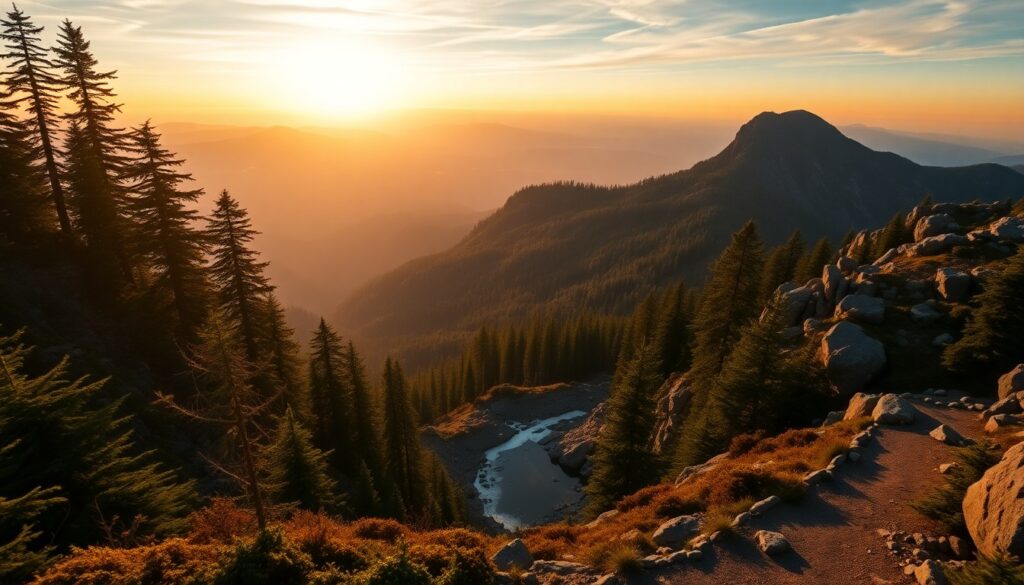
Conquering the Old King: Your Guide to Mailbox Peak Old Trail
As you step onto the initial incline of the Mailbox Peak Old Trail, a hush falls over the moss-draped forest, broken only by the crunch of your boots and the rising rhythm of your breath. The air, cool and damp, carries the scent of damp earth and ancient cedar, hinting at the relentless ascent ahead. This isn’t merely a walk; it’s an intimate conversation with the raw power of the Cascades, a direct challenge to your will and endurance, culminating in one of the most iconic, hard-earned views in Washington.
Trail Specifications
Trail Name: Mailbox Peak Old Trail
Location: North Bend, WA (near I-90)
Distance: Approximately 5.2 miles roundtrip
Elevation Gain: Approximately 4,000 feet
Difficulty: Very Difficult (Strenuous)
GPS Coordinates (Trailhead): 47.5028° N, 121.6888° W
Best Season: July – October (snow-free)
Dog-Friendly: Yes, but be aware of the extreme difficulty and rocky terrain for paws.
Route Overview & Natural Highlights
The Mailbox Peak Old Trail is legendary for its unyielding steepness, an unrelenting climb that gains nearly 4,000 feet in just 2.6 miles. From the moment you leave the trailhead, you are plunged into a dense, old-growth forest dominated by towering Douglas firs and Western Hemlocks, their branches filtering the sunlight into dappled patterns on the forest floor. You’ll navigate a labyrinth of exposed roots, slick with moisture, and scramble over natural rock steps, all while the trail climbs without the luxury of switchbacks.
As you ascend, the ecological zones shift. Below 3,000 feet, the understory is thick with Sword Ferns, Devil’s Club, and salal, indicative of the Pacific Northwest’s temperate rainforest. Higher up, subalpine firs and mountain hemlocks begin to appear, signaling your approach to the treeline. The geology is characteristic of the Western Cascades, primarily igneous and metamorphic rocks, sculpted by ancient glaciers, creating the rugged, exposed ridges you’ll encounter. Keep an eye out for diverse birdlife, including Steller’s Jays and various woodpeckers, and you might spot deer or even signs of black bears in the quieter hours. The reward for your relentless effort is not just the summit, but also intermittent views through breaks in the canopy, offering tantalizing glimpses of the Snoqualmie Valley and the surrounding peaks.
Turn-by-Turn Trail Breakdown
Trailhead to Mid-Trail Ascent: Your journey begins immediately with a steep, direct climb. The first mile is a relentless, root-choked path, often muddy, demanding constant attention to foot placement. You’ll gain significant elevation quickly, passing through a dark, verdant forest that feels ancient and isolated. There are few flat sections, so settle into a steady, deliberate pace.
Mid-Trail to Upper Forest & Rock Garden: Around the 1.5-mile mark, the terrain may become rockier, and the forest begins to thin slightly, offering occasional peek-a-boo views. You’ll encounter what’s colloquially known as the “rock garden,” a section of larger, more exposed boulders and loose scree that requires careful footing and often hand-holds. This section is particularly challenging and can be slow-going, especially when wet. The grade remains consistently steep, pushing your limits.
Summit Push, Mailbox, and Return: The final push to the summit is the most exposed and often involves a mild scramble over larger rocks and boulders. You’ll emerge from the treeline onto a rocky, exposed ridge. The iconic mailbox, filled with various trinkets and a logbook, will eventually come into view, signaling your arrival. From the summit, you’re treated to truly panoramic 360-degree views of the North Cascades, including Mount Rainier on a clear day, and the urban sprawl of the Puget Sound. After soaking in the views and signing the logbook, prepare for the equally challenging descent. The steepness that made the ascent so arduous now requires careful knee management and controlled steps.
Seasonal Guide & Best Times
- Spring (March-May): Expect significant snowpack, especially in the upper half of the trail. Avalanche danger is present, and specialized gear like ice axes and microspikes are often necessary. Mud is prevalent in the lower sections. Not recommended for casual hikers.
- Summer (June-August): This is the most popular and generally safest time. The trail is typically snow-free by late June or early July. Expect crowded conditions, especially on weekends. Start early to beat the heat and secure parking.
- Fall (September-November): Cooler temperatures and fewer crowds make fall an appealing option. The lower forest offers some subtle fall colors. Be prepared for early season snow at higher elevations, especially from October onwards. Views can be spectacular with crisp air.
- Winter (December-February): Mailbox Peak transforms into a serious mountaineering objective. Heavy snow, ice, and high avalanche risk are constant. Only experienced winter hikers with proper gear (snowshoes, crampons, ice axe, avalanche beacon/probe/shovel) and training should attempt it.
Essential Gear & Safety
- Sturdy Hiking Boots: Waterproof boots with excellent ankle support and aggressive tread are non-negotiable for the steep, often slippery terrain.
- Plenty of Water & Electrolytes: The relentless climb will dehydrate you quickly. Carry at least 3-4 liters per person.
- Layered Clothing: Weather can change rapidly, especially at elevation. Bring waterproof outer layers.
- Navigation Tools: A map, compass, and a reliable GPS device or app (like AllTrails) are essential. Download offline maps.
- First-Aid Kit & Headlamp: Be prepared for minor injuries or unexpected delays.
- Trekking Poles: Highly recommended for both ascent and descent to save your knees and aid balance.
- For more details and real-time trail conditions, check the AllTrails Mailbox Peak Old Trail page.
Getting There & Parking
The Mailbox Peak Trailhead is conveniently located just off I-90, east of North Bend, WA. From Seattle, take I-90 East to Exit 34 (468th Ave SE). Turn left (north) onto 468th Ave SE, then turn right onto SE Middle Fork Rd. Continue for approximately 3 miles until you reach the large,
Curated Literature & Seattle Downtown Calendar
The Architecture of Focus: Deep Work & Modern Mastery
By Founders Library Press
A structured framework for strategic clarity, productivity, and authentic execution.
Upcoming Downtown Happenings
Live acoustic sessions, gallery receptions, literary salons, and independent trade shows across Seattle.