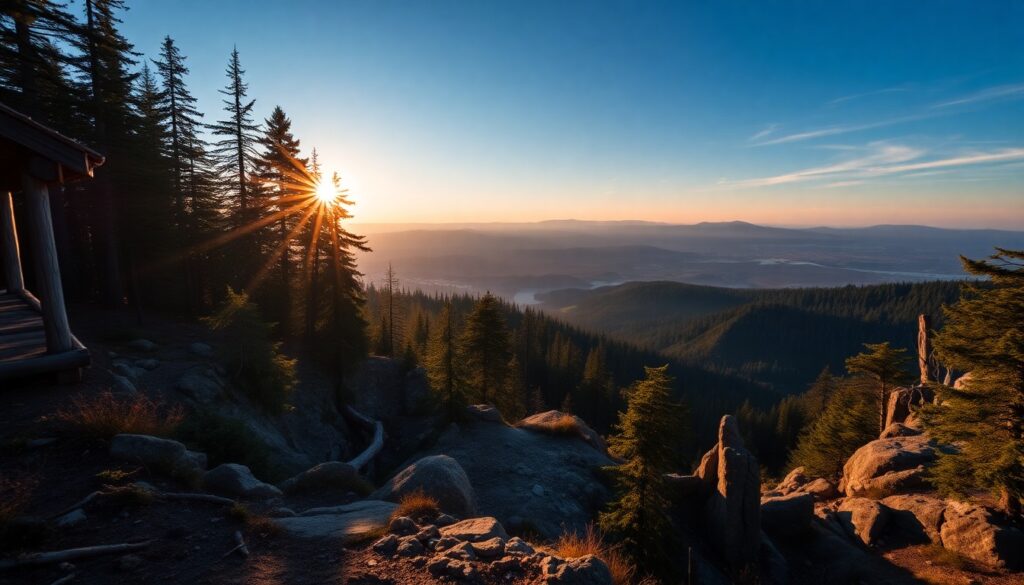
Step into a world where the urban hum fades into a gentle rustle of leaves, and the air carries the earthy scent of damp soil and ancient conifers. The Bridle Trails Forest Loop offers a verdant escape, a sanctuary of towering trees and soft pathways just moments from Kirkland’s vibrant core. Here, sunlight filters through a dense canopy, dappling the forest floor and inviting you into a peaceful communion with nature, a truly unique experience in the heart of the Eastside.
Trail Specifications
Trail Name: Bridle Trails Forest Loop
Location: Kirkland, WA (Bridle Trails State Park)
Distance: Approximately 3.8 miles (main loop)
Elevation Gain: ~150 feet
Difficulty: Easy to Moderate
GPS Coordinates (Main Trailhead): 47.6791° N, 122.1558° W
Best Season: Year-round, with unique experiences in each season
Dog-Friendly: Yes, on leash
Route Overview & Natural Highlights
The Bridle Trails Forest Loop guides you through a quintessential Pacific Northwest lowland forest, a remarkable preservation effort situated between the rapidly developing cities of Kirkland and Redmond. The terrain is generally flat with gentle undulations, making it accessible for a wide range of outdoor enthusiasts. You’ll navigate wide, well-maintained dirt and gravel paths, many of which are shared with equestrians, a nod to the park’s historical use and namesake. The underlying geology consists primarily of glacial till deposited during the last ice age, creating the gentle slopes and rich, loamy soil that supports this thriving ecosystem.
As you traverse the loop, you’ll be enveloped by a dense canopy dominated by towering Douglas Firs (Pseudotsuga menziesii), Western Hemlocks (Tsuga heterophylla), and Western Red Cedars (Thuja plicata). Look for the distinctive furrowed bark of the firs and the drooping leaders of the hemlocks. Beneath these giants, a lush understory flourishes with Sword Ferns (Polystichum munitum), their fronds unfurling in vibrant green, and the broad leaves of Bigleaf Maples (Acer macrophyllum). In spring, you might spot native wildflowers, while in autumn, the maples add splashes of gold to the evergreen backdrop. Keep an eye out for local wildlife; it’s common to encounter Black-tailed Deer (Odocoileus hemionus columbianus), various woodpeckers, and a chorus of songbirds. The occasional hoot of an owl or the scurry of a squirrel reminds you that you are a visitor in their natural home.
Turn-by-Turn Trail Breakdown
Trailhead Start
Your journey begins at the main trailhead parking lot, easily accessible from 132nd Avenue NE. After displaying your Discover Pass, you’ll find several trail entry points. For the main Forest Loop, look for the wide, clearly marked path heading into the woods. The initial stretch is broad and inviting, often lined with majestic Douglas Firs, instantly immersing you in the forest environment. You’ll pass informational kiosks providing maps and park regulations. Stay on the main paths, following signs that guide you towards the larger loop, avoiding narrower side trails unless you wish to explore shorter detours.
Mid-Trail Features
As you progress, the trail winds deeper into the park, offering a sense of seclusion despite its proximity to urban areas. You’ll encounter several small wooden bridges crossing seasonal streams, particularly during the wetter months. The path here maintains its wide, packed-earth surface, making for comfortable walking. Notice the diverse undergrowth, from dense thickets of Salal (Gaultheria shallon) to patches of Huckleberry (Vaccinium parvifolium). This section of the loop often feels the most remote, with less ambient noise and more opportunities to observe birds and other small creatures. You’ll cross a few junctions with other named trails, such as the “Lake Loop” or “Powerline Trail,” but continuing straight will keep you on the main Forest Loop.
Summit/Destination & Return
As a loop trail, there isn’t a singular “summit,” but rather a continuous journey through the forest. The furthest point of the loop provides the deepest immersion before the trail gently begins to curve back towards the trailhead. You’ll notice the subtle shift in light as you complete the full circle, perhaps recognizing landmarks from your initial entrance. The return leg offers a fresh perspective on the same beautiful scenery, allowing you to catch details you might have missed earlier. The path remains consistent in quality, guiding you back to the main parking area, where the sounds of civilization gradually become more apparent, signaling the end of your tranquil forest escape.
Seasonal Guide & Best Times
- Spring (March – May): The forest awakens with fresh green growth. Expect mild temperatures and occasional rain. Wildflowers begin to bloom, and migratory birds return, filling the air with their songs. The ground can be muddy in spots, so waterproof footwear is recommended.
- Summer (June – August): Warm, dry weather makes this an ideal time for a walk. The canopy provides welcome shade, keeping the trails cooler than open areas. Weekends can be popular, so consider an early morning or late afternoon visit for more solitude.
- Autumn (September – November): A spectacular time as Bigleaf Maples turn golden, contrasting beautifully with the evergreens. Cooler, crisp air and fewer insects make for pleasant hiking. Rain becomes more frequent towards late fall, enhancing the earthy scents of the forest.
- Winter (December – February): The park remains open and offers a unique, serene experience. Expect cool, damp conditions, often with mist or light rain. While snow is infrequent, a dusting transforms the landscape into a peaceful, white wonderland. Waterproof gear is essential.
Essential Gear & Safety
- Proper Footwear: Comfortable, broken-in hiking shoes or boots are recommended, especially waterproof ones during wetter seasons.
- Water & Snacks: Even on a shorter loop, staying hydrated is key. Pack a light snack for energy.
- Layered Clothing: Pacific Northwest weather can change rapidly. Layers allow you to adapt to temperature shifts.
- Navigation: While the trails are well-marked, carrying a map (available at the trailhead or via an app) is wise. You can find more details and a map on AllTrails.
- Discover Pass: Required for parking at Bridle Trails State Park. Purchase online or at the park entrance.
- Leashed Dogs: If bringing your canine companion, ensure they remain on a leash at all times, out of respect for other users and wildlife.
Getting There & Parking
Bridle Trails State Park is conveniently located at 6900 132nd Ave NE, Kirkland, WA 98033. From I-405, take exit 17 (NE 124th St) or exit 18 (NE 116th St) and head east, then north on 132nd Ave NE. The park entrance and a large paved parking lot will be on your right. Parking requires a Washington State Parks Discover Pass, which can be purchased annually or as a one-day pass. Display your pass clearly on your dashboard. Restrooms are available near the main parking area. The park is generally open from dawn to dusk, though specific gate hours may vary seasonally; always check the official Washington State Parks website for the most current information before your visit.
Curated Literature & Seattle Downtown Calendar
The Architecture of Focus: Deep Work & Modern Mastery
By Founders Library Press
A structured framework for strategic clarity, productivity, and authentic execution.
Upcoming Downtown Happenings
Live acoustic sessions, gallery receptions, literary salons, and independent trade shows across Seattle.